

HCMC IFC Infrastructure: The Market Plumbing Behind Thu Thiem
November 6, 2025
Vietnam Stock Market Upgrade: Frontier to Emerging
November 10, 2025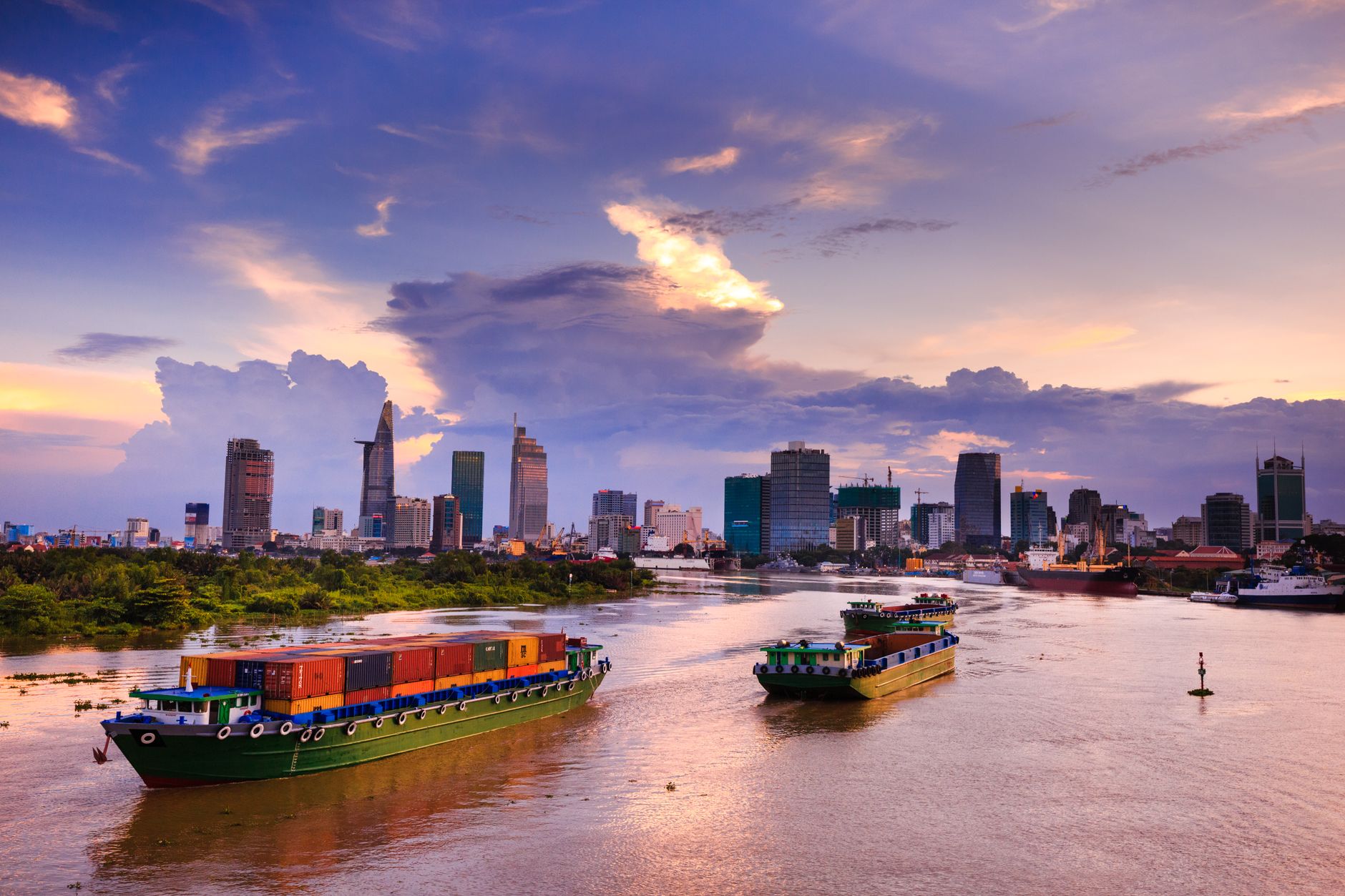
Founder Notes — Lotus Investment Group
Vietnam Infrastructure Investment: Ports, Rail, Power
Tham vọng hạ tầng: cảng, đường sắt và điện đưa Việt Nam vào trục hội nhập khu vực
Chương tăng trưởng kế tiếp của Việt Nam sẽ được viết bằng bê tông và thép. Nỗ lực mở rộng mạng lưới giao thông, hiện đại hóa hậu cần và nối liền các vùng ven biển với nội địa đang vẽ lại cả bản đồ vật lý lẫn bản đồ tài chính của đất nước. Khi dòng vốn đầu tư hạ tầng tăng tốc, TP. Hồ Chí Minh nằm ở trung tâm một chiến lược kết nối liên kết cảng biển, đường sắt và các hành lang công nghiệp xuyên ASEAN.
Vốn công và vốn tư chảy qua đường ống dự án ở mức kỷ lục trong năm 2025, và nền tảng nó dựng lên có ý nghĩa với mọi thứ phía sau: công nghiệp hóa, hội nhập chuỗi cung ứng, vị thế của đất nước như một điểm sản xuất. Những dự án đầu tàu, từ cảng trung chuyển Cần Giờ tới tuyến đường sắt Bàu Bàng–Mộc Bài, cho thấy việc hiện đại hóa giao thông đang đông cứng lại thành một luận đề đầu tư cấp quốc gia. Với nhà đầu tư, đây không phải mấy dòng kỹ thuật. Chúng báo hiệu chính sách nhất quán, chất lượng tài sản đi lên và một môi trường đầu tư cuối cùng cũng trưởng thành.
Cảng biển — động cơ thương mại khu vực
Cảng biển Việt Nam gánh hơn 90% tổng khối lượng thương mại, khiến hạ tầng hàng hải thành xương sống của năng lực cạnh tranh xuất khẩu. Quy hoạch đến năm 2030 ưu tiên cảng nước sâu đủ sức đón tàu mẹ cỡ lớn và khớp vào hậu cần đa phương thức. Trong số đó, cảng trung chuyển quốc tế Cần Giờ là điểm bứt phá rõ nhất.
Phát triển theo hình thức đối tác công–tư do Cảng vụ Sài Gòn dẫn dắt cùng các nhà khai thác quốc tế, Cần Giờ sẽ neo vị thế của Việt Nam trên hành lang Biển Đông. Công suất thiết kế 10 triệu TEU mỗi năm bổ trợ cho cụm Cái Mép–Thị Vải và giải tỏa ùn tắc quanh TP. Hồ Chí Minh. Khi vận hành, cảng cho phép tàu chạy thẳng sang châu Âu và Bắc Mỹ mà không phải vòng qua các trung tâm trung chuyển như Singapore hay Hồng Kông.
Chính phủ dự kiến khởi công vào cuối năm 2025, sau khi xong phê duyệt môi trường và chốt tài chính. Các nâng cấp song song ở Cái Mép và Hiệp Phước sẽ nâng tổng năng lực thông qua thêm hơn 35%. Cộng lại, chúng biến dải bờ biển phía nam thành một cửa ngõ hàng hải vào loại hiệu quả nhất châu Á và làm các khu công nghiệp ven biển hấp dẫn hơn.
Đường sắt và kết nối công nghiệp
Cảng biển neo thương mại đối ngoại; đường sắt quyết định hiệu quả nội địa. Việt Nam đang theo đuổi một chương trình hiện đại hóa đường sắt đầy tham vọng để nối các trung tâm chế tạo và hậu cần. Tuyến Đà Nẵng–Hội An dài 24 km, thiết kế để ăn khớp với hệ thống metro tương lai và các hành lang du lịch, là biểu tượng ở miền Trung. Đầu tàu của miền Nam là tuyến Bàu Bàng–Mộc Bài, nối trung tâm công nghiệp Bình Dương ra biên giới Campuchia.
Tuyến này buộc các khu công nghiệp vào mạng vận tải hàng hóa xuyên ASEAN, làm nhẹ ùn tắc xe tải và cắt thời gian vận chuyển gần 40%. Tài trợ qua khung đối tác công–tư, nó pha trộn các hợp vốn tín dụng trong nước với kỹ thuật quốc tế. Hoàn thành, nó tạo một chuỗi hậu cần liền mạch từ TP. Hồ Chí Minh tới Phnom Penh rồi sang Bangkok, đặt Việt Nam vào một nút then chốt của mạng vận tải Tiểu vùng Mekong mở rộng.
Xa hơn về phía bắc, Quốc hội đã thông qua chủ trương đầu tư đường sắt cao tốc Bắc–Nam vào cuối năm 2024, còn nghiên cứu khả thi vẫn tiếp tục cho các nhánh nối từ Vũng Tàu tới sân bay Long Thành. Đây không chỉ là tiện lợi đi lại. Chúng vẽ lại kinh tế không gian bằng cách rút chi phí gắn với khoảng cách ra khỏi bản đồ chế tạo.
Hành lang hậu cần và hình thành cụm kinh tế
Cuộc chuyển mình hậu cần của Việt Nam sâu hơn phần cứng giao thông. Bộ Công Thương đang dựng các hành lang hậu cần vùng, gấp cảng biển, cao tốc và trung tâm phân phối lại thành những cụm kinh tế tích hợp. Hành lang phía nam, chạy từ Long An qua Cần Giờ tới Bà Rịa–Vũng Tàu, được phát triển thành một hệ sinh thái đa phương thức phục vụ xuất khẩu, thương mại điện tử và phân phối chuỗi lạnh.
Các nhà phát triển tư nhân, trong đó có những tập đoàn công nghiệp lớn của Việt Nam, đang bắt tay với nhà khai thác hậu cần Nhật Bản và Hàn Quốc để dựng kho thông minh và khu ngoại quan dọc các tuyến này. Thông quan điện tử, vận đơn điện tử và quản lý bãi tự động được áp dụng để bám chuẩn chuỗi cung ứng toàn cầu. Kết quả là cắt được chi phí phi thuế quan, thứ rào cản thương mại bền bỉ bậc nhất mà ASEAN chưa gỡ xong.
Ngân hàng Thế giới đặt chi phí hậu cần của Việt Nam ở khoảng 16% GDP, cao hơn các nước cùng khu vực. Cách tiếp cận hành lang nhắm kéo con số đó về gần 12% vào năm 2030. Hậu cần rẻ hơn chảy thẳng vào biên lợi nhuận xuất khẩu và hút vốn dịch chuyển sản xuất về gần, nhất là điện tử, ô tô và nông nghiệp công nghệ.
Tài trợ cho làn sóng hạ tầng
Tham vọng của Việt Nam cần nguồn tài trợ đa dạng. Ngân sách công chỉ phủ một phần đường ống dự án; phần còn lại dựa vào các cấu trúc đối tác công–tư, phát hành trái phiếu và vốn nước ngoài góp vào. Chính phủ đã tinh gọn khâu chuẩn bị dự án và cơ chế chia sẻ rủi ro cho khớp. Nghị định 35/2021 đặt ra phân bổ rủi ro doanh thu rõ ràng và cho phép bảo lãnh chính phủ với các dự án giao thông trọng yếu.
Các nhà cho vay đang vào cuộc. Ngân hàng Phát triển châu Á và JICA của Nhật đã công bố các chương trình đồng tài trợ cho cảng biển và đường sắt đô thị. Ngân hàng trong nước như BIDV và Vietcombank đang mở các hạn mức tín dụng hạ tầng xanh, để nhà đầu tư gắn với ESG vào được qua tài trợ pha trộn. Sự dịch chuyển này có tính cấu trúc — từ rót vốn theo dự án rời rạc sang hoạch định vốn ở cấp danh mục.
Chính quyền các tỉnh cũng đang thử cơ chế thu hồi giá trị từ đất để tài trợ hành lang mới. Nhà phát triển công nghiệp hưởng lợi từ giá đất lên dọc các tuyến đường sắt và cao tốc, tạo một vòng lặp có lợi giữa hạ tầng và giá trị bất động sản. Định giá minh bạch và chuẩn kiểm toán độc lập sẽ là điều kiện để giữ niềm tin nhà đầu tư trong mô hình này.
Quản trị, ESG và năng lực triển khai
Triển khai dựa vào năng lực quản trị ngang với nguồn vốn. Cơ chế phối hợp liên bộ mới buộc chủ đầu tư phải khớp tiến độ thiết kế, giải phóng mặt bằng và tài chính trước khi phê duyệt, cắt bớt những chậm trễ vốn từng làm đình trệ dự án công. TP. Hồ Chí Minh đi xa hơn, đưa vào đánh giá theo hiệu quả cho các sở ngành hạ tầng, với từng giai đoạn (khả thi, cấp phép, thi công) được theo dõi trên một bảng điều khiển trung tâm mà các cơ quan giám sát đọc được. Tỉnh nào nhân được hệ thống này có thể cùng nhau nâng năng lực hấp thụ và giải ngân vốn của cả nước.
Tính bền vững giờ là một phần của tài trợ, không phải thứ gắn thêm. Cam kết phát thải ròng bằng không vào năm 2050 đẩy cảng biển sang điện bờ và năng lượng tái tạo, còn đường sắt đô thị dùng phanh tái sinh để giảm phát thải. Nhà đầu tư quốc tế ngày càng coi tuân thủ ESG là điều kiện tiên quyết để rót vốn. Ủy ban Chứng khoán Nhà nước đã ban hành hướng dẫn về trái phiếu xanh, và các đợt phát hành thí điểm đã tài trợ dự án năng lượng tái tạo và quản lý nước; các nền tảng tài trợ pha trộn do IFC và ADB hậu thuẫn giảm rủi ro cho tài sản giai đoạn đầu để vốn tư nhân nhận được kỳ hạn dài hơn. Sự khớp này cũng làm trơn việc hội nhập với các chuỗi cung ứng toàn cầu có tính giá carbon, cho doanh nghiệp trong khu công nghiệp xanh một lợi thế vượt khỏi chi phí.
Giao thông thông minh và hạ tầng đô thị
Song song với các dự án quốc gia, các đô thị Việt Nam đang đầu tư vào hạ tầng thông minh để nâng chất lượng sống và sản lượng. TP. Hồ Chí Minh đã đưa tuyến metro số 1 vào vận hành từ tháng 12/2024. Mạng metro cùng làn xe buýt nhanh và hệ thống điều khiển giao thông thông minh của thành phố nhắm vào ùn tắc và ô nhiễm. Dữ liệu thời gian thực, vé điện tử và tối ưu lộ trình bằng AI biến hạ tầng từ tài sản tĩnh thành hệ thống biết tự điều chỉnh.
Những dự án này cũng kéo theo đối tác công nghệ tư nhân. Doanh nghiệp viễn thông và công nghệ thông tin đang làm việc với chính quyền đô thị để triển khai hệ giám sát có 5G trên cầu và hầm, kéo dài tuổi thọ tài sản và hạ chi phí bảo trì — qua đó cải thiện hồ sơ sinh lợi cho nhà đầu tư. Khi giao thông thông minh lan ra, câu chuyện hạ tầng của Việt Nam nói về đổi mới không kém gì về xây dựng.
Hội nhập khu vực và sắp xếp lại chuỗi cung ứng
Cuộc xây dựng của Việt Nam có hệ quả cho cả khu vực. Kết nối tốt hơn với Campuchia, Lào và Thái Lan làm mạnh thương mại xuyên biên giới trong Tiểu vùng Mekong mở rộng. Các tuyến cao tốc nối TP. Hồ Chí Minh tới Phnom Penh và Bangkok sẽ cắt thời gian vận chuyển hàng hóa từ ngày xuống giờ, mở ra sản xuất đúng-lúc xuyên biên giới.
Các hành lang này cũng nuôi tầm nhìn hậu cần dài hạn của ASEAN về dòng hàng hóa chảy liền mạch trong khu vực. Khi chuỗi cung ứng dịch chuyển khỏi Trung Quốc, các nâng cấp của Việt Nam biến đất nước thành điểm đặt sản xuất được ưa chuộng. Với nhà sản xuất đa quốc gia, gần cảng và đường sắt đã nâng cấp giúp hạ rủi ro vận hành và bảo vệ tiến độ giao hàng ra thị trường toàn cầu.
Tác động vĩ mô và cơ hội cho nhà đầu tư
Đầu tư hạ tầng chạy ở khoảng 10% GDP Việt Nam và đỡ hàng triệu việc làm, với hệ số nhân lan vào vật liệu, tài chính và bất động sản. Bộ Kế hoạch và Đầu tư ước tính mỗi điểm phần trăm tăng chi cho hạ tầng nâng GDP thêm khoảng 1,3 điểm trong vòng hai năm. Đòn bẩy ấy là lý do hạ tầng vẫn là trung tâm của chiến lược tăng trưởng.
Với nhà đầu tư, dải cơ hội đang rộng ra. Quỹ dài hạn tiếp cận được lợi suất ổn định, có tài sản bảo chứng trong hậu cần, năng lượng và vận tải. Vốn cổ phần tư nhân và nhà đầu tư có chủ quyền đang dò các liên doanh với nhà phát triển nội địa để xây và vận hành hạ tầng công nghiệp, còn các công ty niêm yết ngành xây dựng, vật liệu và cảng cho phép tiếp xúc với chu kỳ qua thị trường vốn. Đấu thầu tinh gọn, công khai minh bạch và trọng tài độc lập thêm phần yên tâm về quản trị. Việt Nam đang dịch từ mô hình dẫn dắt bởi xây dựng sang một nền kinh tế hạ tầng do thị trường vốn dẫn dắt.
Kết luận
Hạ tầng đã thành chất xúc tác tăng trưởng định danh của Việt Nam và cũng là thước đo quản trị của đất nước. Cải cách phối hợp, tài trợ đa dạng và sự khớp ESG đang biến tham vọng thành thực thi, và sự cộng hưởng giữa cảng biển, đường sắt và hành lang hậu cần đang biến kết nối vật lý thành hội nhập chiến lược. Khi làn sóng tăng tốc, Việt Nam đang dựng hơn cả tài sản. Đất nước đang dựng uy tín thể chế và ảnh hưởng khu vực để neo quỹ đạo kinh tế của mình tới năm 2030 và xa hơn.
Lotus Investment Group tư vấn M&A xuyên biên giới và FDI vào Việt Nam và Đông Nam Á. Nếu quý vị đang thẩm định một vị thế tại Việt Nam, liên hệ với chúng tôi.
Vietnam’s next growth chapter will be written in concrete and steel. The push to widen transport networks, modernise logistics, and stitch coastal and inland regions together is redrawing both the physical and the financial map of the country. As Vietnam infrastructure investment accelerates, Ho Chi Minh City sits at the centre of a connectivity strategy that links ports, railways, and industrial corridors across ASEAN.
Record public and private capital moved through the pipeline in 2025, and the base it is building matters for everything downstream: industrialisation, supply-chain integration, the country’s standing as a production destination. Flagship projects, from the Cần Giờ transshipment port to the Bàu Bàng–Mộc Bài railway, show transport modernisation hardening into a national investment thesis. For investors these are not engineering line items. They signal policy continuity, rising asset quality, and an investment environment that is finally maturing.
Ports as engines of regional trade
Vietnam’s seaports handle over 90% of the country’s trade volume, which makes maritime infrastructure the load-bearing wall under export competitiveness. The 2030 master plan prioritises deep-water facilities able to serve mega-vessels and plug into multimodal logistics. The Cần Giờ international transshipment port is the standout catalyst.
Developed under a public-private partnership led by the Saigon Port Authority with international operators, Cần Giờ will anchor Vietnam’s position in the South China Sea corridor. Its design capacity of 10 million TEU a year complements the Cái Mép–Thị Vải complex and eases congestion around Ho Chi Minh City. Once running, it allows direct sailings to Europe and North America without routing through regional hubs like Singapore or Hong Kong.
The government expects construction to begin by late 2025, once environmental approval and financing close. Parallel upgrades at Cái Mép and Hiệp Phước will lift total throughput capacity by more than 35%. Together they turn the southern coastline into one of Asia’s more efficient maritime gateways and sharpen the appeal of the coastal industrial zones.
Railways and industrial connectivity
Ports anchor external trade; rail decides domestic efficiency. Vietnam is now pursuing an ambitious railway modernisation programme to connect its manufacturing and logistics centres. The 24 km Danang–Hoi An line, designed to mesh with future metro systems and tourism corridors, is the emblem in the centre. The south’s flagship is the Bàu Bàng–Mộc Bài railway, linking Binh Duong’s industrial hub to the Cambodian border.
That line ties industrial parks to trans-ASEAN freight routes, thinning truck congestion and cutting transit times by close to 40%. Funded through a PPP framework, it blends domestic credit syndicates with international engineering. Completed, it forms an unbroken logistics chain from Ho Chi Minh City to Phnom Penh and on to Bangkok, putting Vietnam at a key node in the Greater Mekong transport network.
Further north, the National Assembly approved the investment policy for the high-speed north–south railway in late 2024, and feasibility work continues on the extensions from Vung Tau to Long Thanh Airport. These are more than transport convenience. They redraw spatial economics by pulling distance-related costs out of the manufacturing map.
Logistics corridors and economic clustering
Vietnam’s logistics transformation runs deeper than transport hardware. The Ministry of Industry and Trade is building regional logistics corridors that fold ports, highways, and distribution hubs into integrated economic clusters. The southern corridor, running from Long An through Cần Giờ to Bà Rịa–Vũng Tàu, is being developed as a multimodal ecosystem for exports, e-commerce, and cold-chain distribution.
Private developers, including leading Vietnamese industrial groups, are partnering with Japanese and Korean logistics operators to build smart warehouses and bonded zones along these routes. Digital customs clearance, electronic bills of lading, and automated yard management are being adopted to meet global supply-chain standards. The payoff is lower non-tariff costs, which remain one of ASEAN’s most stubborn trade barriers.
The World Bank puts Vietnam’s logistics costs at roughly 16% of GDP, higher than regional peers. The corridor approach aims to bring that toward 12% by 2030. Cheaper logistics feed straight into export margins and pull near-shoring investment, especially in electronics, automotive, and agritech.
Financing the infrastructure wave
Vietnam’s ambitions need diversified financing. Public money covers only part of the pipeline; the rest depends on PPP structures, bond issuance, and foreign participation. The government has streamlined project preparation and risk-sharing to match. Decree 35/2021 set out clear revenue-risk allocation and allows government guarantees for key transport projects.
Lenders are responding. The Asian Development Bank and Japan’s JICA have announced co-lending programmes for port and urban rail. Domestic banks such as BIDV and Vietcombank are opening green-infrastructure credit lines, which let ESG-linked investors come in through blended finance. The shift is structural: from ad hoc project funding toward portfolio-level capital planning.
Provincial governments are also testing land-value capture to fund new corridors. Industrial developers gain from rising land prices along rail and expressway routes, creating a virtuous cycle between infrastructure and real-estate value. Transparent valuation and independent audit standards will be essential to keep investor confidence in this model.
Governance, ESG, and project delivery
Execution rests on governance capacity as much as on finance. New inter-ministerial coordination now requires sponsors to align design, land clearance, and financing schedules before approval, which trims the delays that historically stalled public projects. Ho Chi Minh City has gone further, introducing performance-based evaluation for infrastructure departments, with each stage (feasibility, licensing, construction) tracked on a central dashboard that oversight agencies can read. Provinces that copy this system could collectively raise Vietnam’s capacity to absorb and deploy capital.
Sustainability is now part of the financing, not a bolt-on. Vietnam’s net-zero-by-2050 commitment pushes ports toward shore-power and renewables, while urban rail uses regenerative braking to cut emissions. International investors increasingly treat ESG compliance as a precondition for funding. The State Securities Commission has issued green-bond guidelines, and pilot issuances have already funded renewable-energy and water-management projects; blended-finance platforms backed by the IFC and ADB de-risk early-stage assets so private capital can take longer maturities. The alignment also smooths integration with global supply chains that price carbon, giving firms in green industrial parks an edge that runs past cost.
Smart mobility and urban infrastructure
Alongside the national projects, Vietnam’s cities are investing in smart infrastructure to lift livability and output. Ho Chi Minh City opened the first line of its metro in December 2024, and that network, together with bus-rapid-transit lanes and smart-traffic systems, targets congestion and pollution. Real-time data, digital ticketing, and AI-driven route optimisation turn infrastructure from static assets into systems that adjust on the fly.
These projects also draw private technology partners. Telecom and IT firms are working with municipal authorities to deploy 5G-enabled monitoring across bridges and tunnels, extending asset life and lowering maintenance costs — which improves the return profile for investors. As smart mobility spreads, Vietnam’s infrastructure story becomes as much about innovation as about construction.
Regional integration and supply-chain realignment
Vietnam’s build-out has regional consequences. Better connectivity with Cambodia, Laos, and Thailand strengthens cross-border trade within the Greater Mekong Subregion. Expressways linking Ho Chi Minh City to Phnom Penh and Bangkok will cut freight transit from days to hours, opening just-in-time manufacturing across borders.
The corridors also feed ASEAN’s long-term logistics vision of goods moving freely across the region. As supply chains diversify away from China, Vietnam’s upgrades make it a preferred base for production relocation. For multinational manufacturers, proximity to better ports and railways lowers operational risk and protects delivery to global markets.
Macroeconomic impact and the investor opportunity
Infrastructure investment runs at roughly 10% of Vietnam’s GDP and supports millions of jobs, with a multiplier that reaches into materials, finance, and real estate. The Ministry of Planning and Investment estimates that a one-percentage-point rise in infrastructure spending lifts GDP by about 1.3 points within two years. That kind of return is why infrastructure stays the centrepiece of the growth strategy.
For investors, the opportunity set is widening. Long-term funds can reach stable, asset-backed returns across logistics, energy, and transport. Private-equity and sovereign investors are exploring joint ventures with local developers to build and operate industrial infrastructure, while listed construction and materials names, plus the port operators, offer exposure to the cycle through public markets. Streamlined procurement, transparent bidding, and independent arbitration add governance comfort. Vietnam is moving from a construction-led model toward a capital-market-driven infrastructure economy.
Conclusion
Infrastructure has become Vietnam’s defining growth catalyst and its governance benchmark. Coordinated reform and diversified financing, paired with a real ESG discipline, are translating ambition into execution, and the synergy between ports, railways, and logistics corridors is turning physical connectivity into strategic integration. As the wave accelerates, Vietnam is building more than assets. It is building the institutional credibility and regional influence that will anchor its economic trajectory through 2030 and beyond.
Lotus Investment Group advises on cross-border M&A and FDI into Vietnam and Southeast Asia. If you are underwriting Vietnam exposure, get in touch.
Nguồn / Sources
[1]
Trung tâm Báo chí TP. Hồ Chí Minh (2025) — TP.HCM đẩy mạnh cải cách thái độ phục vụ của chính quyền.